Published Volumes
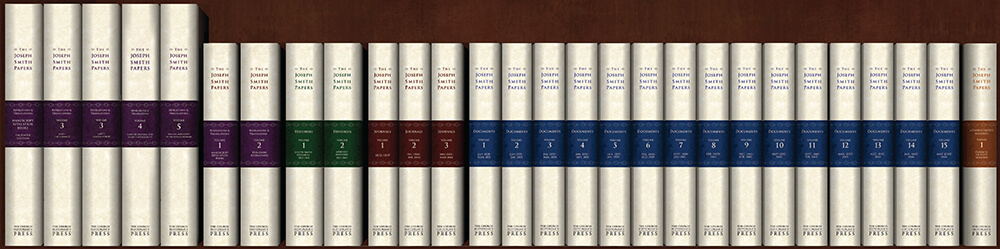
The Joseph Smith Papers includes accurate and unabridged transcripts of all extant Joseph Smith documents to which the editors can gain access. The project includes both print and electronic components. The print edition of The Joseph Smith Papers consists of twenty-seven volumes, divided into five series: Documents, Journals, Revelations and Translations, Histories, and Administrative Records; two additional series, the Legal Records series and the Financial Records series, are published online. All of the printed material will eventually appear on the Joseph Smith Papers website. This website will also publish many documents in advance of the printed edition and will include many documents that will never be included in the printed volumes. The Revelations and Translations series includes some larger-format volumes that present photographic facsimiles of original documents.
For more information on how The Joseph Smith Papers volumes may be useful to your research, see the article “Using The Joseph Smith Papers: An Introduction to Journals, Volume 1 from the Inside Out.”
Order Volumes
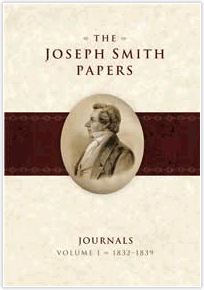
Journals, Volume 1: 1832–1839, edited by Dean C. Jessee, Mark Ashurst-McGee, and Richard L. Jensen
ISBN-13: 978-1-57008-849-0
Volume 1 of the Journals series, published in 2008, features Joseph Smith’s first five journals.

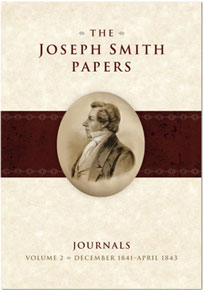
Journals, Volume 2: December 1841–April 1843, edited by Andrew H. Hedges, Alex D. Smith, and Richard Lloyd Anderson
ISBN-13: 978-1-60908-737-1
Volume 2 of the Journals series, published in 2011, features the first Nauvoo, Illinois, journal of Joseph Smith as well as part of the second.
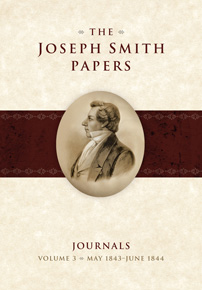
Journals, Volume 3: May 1843–June 1844, edited by Andrew H. Hedges, Alex D. Smith, and Brent Rogers
ISBN-13: 978-1-62972-147-7
The third and final volume of the Journals series features journal entries from the last year of Joseph Smith’s life. Published in 2015, the volume discusses Joseph Smith’s teachings and the escalating conflict against Smith and the church.
Revelations and Translations: Manuscript Revelation Books (Facsimile Edition), edited by Robin Scott Jensen, Robert J. Woodford, and Steven C. Harper
ISBN-13: 978-1-57008-850-6
The first volume of the Revelations and Translations series, published in 2009, features two manuscript books into which many of Joseph Smith’s revelations were copied by early church scribes.
Revelations and Translations, Volume 1: Manuscript Revelation Books, edited by Robin Scott Jensen, Robert J. Woodford, and Steven C. Harper
ISBN-13: 978-1-60641-909-0
This volume of the Revelations and Translations series, published in 2011, presents the same textual transcripts and editorial material as the facsimile edition but does not include the photographs of each page of the revelation books.
Revelations and Translations, Volume 2: Published Revelations, edited by Robin Scott Jensen, Richard E. Turley Jr., and Riley M. Lorimer.
ISBN-13: 978-1-60641-942-7
Volume 2 of the Revelations and Translations series, published in 2011, presents Joseph Smith’s revelations in the form that most early Latter-day Saints read and experienced them.
Revelations and Translations, Volume 3, Printer’s Manuscript of the Book of Mormon, edited by Royal Skousen and Robin Scott Jensen
ISBN-13: 978-1-62972-060-9 (part 1)
ISBN-13: 978-1-62972-061-6 (part 2)
Volume 3 of the Revelations and Translations series, published in 2015, presents the most complete early text of the Book of Mormon—the printer’s manuscript.
Revelations and Translations, Volume 4: Book of Abraham and Related Manuscripts, edited by Robin Scott Jensen and Brian M. Hauglid
ISBN-13: 978-1-62972-480-5
Volume 4 in the Revelations and Translations series, published in 2018, includes the various manuscripts and first print publication of the Book of Abraham text.
Revelations and Translations, Volume 5: Original Manuscript of the Book of Mormon, edited by Royal Skousen and Robin Scott Jensen
ISBN-13: 978-1-62972-971-8
Volume 5 of the Revelations and Translations series, published in January 2022, presents all extant fragments of the original manuscript of the Book of Mormon.
Histories, Volume 1: Joseph Smith Histories, 1832–1844, edited by Karen Lynn Davidson, David J. Whittaker, Mark Ashurst-McGee, and Richard L. Jensen
ISBN-13: 978-1-60641-196-4
Volume 1 of the Histories series, published in 2012, presents the six personal and church histories written, dictated, or closely supervised by Joseph Smith.
Histories, Volume 2: Assigned Histories, 1831–1847, edited by Karen Lynn Davidson, Richard L. Jensen, and David J. Whittaker
ISBN-13: 978-1-60908-945-0
Volume 2 of the Histories series, published in 2012, presents four histories written by church historians by assignment from Joseph Smith.
Documents, Volume 1: July 1828–June 1831, edited by Michael Hubbard MacKay, Gerrit J. Dirkmaat, Grant Underwood, Robert J. Woodford, and William G. Hartley
ISBN-13: 978-1-60907-577-4
This volume, published in 2013, inaugurates the core series of The Joseph Smith Papers, the Documents series. It includes the first three years of what survives of Joseph Smith’s papers.
Documents, Volume 2: July 1831–January 1833, edited by Matthew C. Godfrey, Mark Ashurst-McGee, Grant Underwood, Robert J. Woodford, and William G. Hartley
ISBN-13: 978-1-60907-598-9
This second volume of the Documents series, published in 2013, contains revelations, correspondence, minutes of meetings in which Joseph Smith participated, and licenses provided to church officers.
Documents, Volume 3: February 1833–March 1834, edited by Gerrit J. Dirkmaat, Brent M. Rogers, Grant Underwood, Robert J. Woodford, and William G. Hartley
ISBN-13: 978-1-60907-987-1
The third volume of the Documents series, published in 2014, contains minutes, revelations, letters, architectural and city plans, priesthood licenses, legal documents, and an effort to classify the scriptures by topic.
Documents, Volume 4: April 1834–September 1835, edited by Matthew C. Godfrey, Brenden W. Rensink, Alex D. Smith, Max H Parkin, and Alexander L. Baugh
ISBN-13: 978-1-62972-174-3
The fourth volume of the Documents series, published in 2016, contains minutes, revelations, discourses, administrative records, legal documents, personal letters, and recorded blessings, among other documents.
Documents, Volume 5: October 1835–January 1838, edited by Brent M. Rogers, Elizabeth A. Kuehn, Christian K. Heimburger, Max H Parkin, Alexander L. Baugh, and Steven C. Harper
ISBN-13: 978-1-62972-312-9
The fifth volume of the Documents series, published in spring 2017, contains revelations, discourses, prayers, legal documents, personal letters, a map, and banknotes, among other documents.
Documents, Volume 6: February 1838–August 1839, edited by Mark Ashurst-McGee, David W. Grua, Elizabeth A. Kuehn, Alexander L. Baugh, and Brenden W. Rensink
ISBN-13: 978-1-62972-353-2
The sixth volume of the Documents series, published in 2017, contains personal letters, revelations, discourses, minutes, legal documents, and financial documents, among other documents.
Documents, Volume 7: September 1839–January 1841, edited by Matthew C. Godfrey, Spencer W. McBride, Alex D. Smith, and Christopher James Blythe
ISBN-13: 978-1-62972-428-7
The seventh volume of the Documents series, published in April 2018, contains personal correspondence, discourses, minutes, a revelation, and a memorial to the United States Congress, among other documents.
Documents, Volume 8: February–November 1841, edited by Brent M. Rogers, Brett D. Dowdle, Mason K. Allred and Gerrit J. Dirkmaat
ISBN-13: 978-16297-257-03
The eighth volume of the Documents series, published in May 2019, provides a window through which to view and understand Joseph Smith, the Latter-day Saints and their neighbors, and Nauvoo and its environs in 1841.
Documents, Volume 9: December 1841–April 1842, edited by Alex D. Smith, Christian K. Heimburger, and Christopher James Blythe
ISBN-13: 978-16297-268-92
The ninth volume of the Documents series, published in September 2019, contains letters, deeds, bonds, sermon accounts, meeting minutes, marriage licenses, newspaper editorials, and other documents from late 1841 and early 1842.
Documents, Volume 10: May–August 1842, edited by Elizabeth A. Kuehn, Jordan T. Watkins, Matthew C. Godfrey and Mason K. Allred
ISBN-13: 978-1-62972-761-5
The tenth volume of the Documents series, published in May 2020, features over one hundred letters, revelations, meeting minutes, deeds, sermon accounts, and other documents.
Documents, Volume 11: September 1842–February 1843, edited by Spencer W. McBride, Jeffrey D. Mahas, Brett D. Dowdle, and Tyson Reeder
ISBN-13: 978-1-62972-804-9
The eleventh volume of the Documents series, published in October 2020, features 105 letters, sermon accounts, poems, legal records, and other documents.
Documents, Volume 12: March–July 1843, edited by David W. Grua, Brent M. Rogers, Matthew C. Godfrey, Robin Scott Jensen, Jessica M. Nelson, and Christopher James Blythe
ISBN-13: 978-1-62972-888-9
The twelfth volume in the Documents series, published in April 2021, features ninety-six documents including Joseph Smith’s correspondence, accounts of his discourses, and his last major written revelation.
Documents, Volume 13: August–December 1843, edited by Christian K. Heimburger, Jeffrey D. Mahas, Brent M. Rogers, Mason K. Allred, J. Chase Kirkham, and Matthew S. McBride
ISBN-13: 978-1-63993-021-0
The thirteenth volume in the Documents series, published in June 2022, features ninety-eight documents including Joseph Smith’s correspondence, accounts of his discourses, and petitions seeking redress from the federal government.
Documents, Volume 14: 1 January–15 May 1844, edited by Alex D. Smith, Adam H. Petty, Jessica M. Nelson, and Spencer W. McBride
ISBN-13: 978-1-63993-040-1
The fourteenth volume in the Documents series, published in April 2023, features ninety-nine letters, deeds, accounts of discourses, minutes of meetings, memorials to the nation’s leaders, poems, and other documents, telling of a tumultuous period in Joseph Smith’s life and depict a region on the brink of civil war.
Documents, Volume 15: 16 May–28 June 1844, edited by Brett D. Dowdle, Adam H. Petty, J. Chase Kirkham, Elizabeth A. Kuehn, David W. Grua, and Matthew C. Godfrey
ISBN-13: 978-1-63993-128-6
The fifteenth and last volume in the Documents series, published in June 2023, features 104 documents, covering the final six weeks of Joseph Smith’s life and illuminating the events that led to his death.
Administrative Records, Council of Fifty, Minutes, March 1844–January 1846, edited by Matthew J. Grow, Ronald K. Esplin, Mark Ashurst-McGee, Gerrit J. Dirkmaat, and Jeffrey D. Mahas
ISBN-13: 978-1-62972-242-9
The first and only volume of the Administrative Records series, published in 2016, contains the minutes of Council of Fifty meetings held in Nauvoo, Illinois, from March 1844 through January 1846.
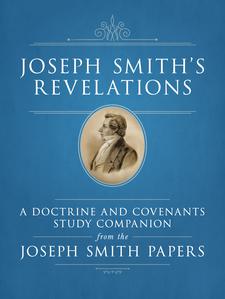
Joseph Smith’s Revelations: A Doctrine and Covenants Study Companion from the Joseph Smith Papers, from the editors of the Joseph Smith Papers
eISBN: 978-1-62973-526-9
This e-book, updated in 2024, is a compilation and historical study of most of the earliest extant versions of Joseph Smith’s revelations now found in the Doctrine and Covenants.
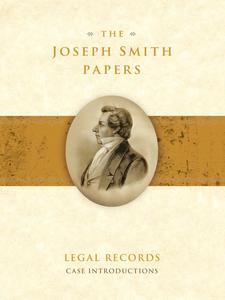
Legal Records: Case Introductions, edited by David W. Grua, Sharalyn D. Howcroft, Jeffrey D. Mahas, Elizabeth A. Kuehn, and Chad O. Foulger
This e-book, published in 2024, is a compilation of introduction to some two hundred legal cases Joseph Smith was involved in between 1819 and 1844 as a plaintiff/complainant, defendant, witness, or judge.
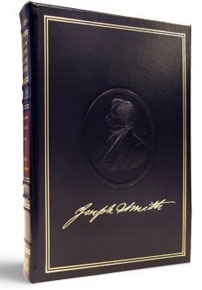
Volumes of The Joseph Smith Papers are available to the public in a limited leather-bound edition. For pricing and availability, email Guestservices@deseretbook.com.